
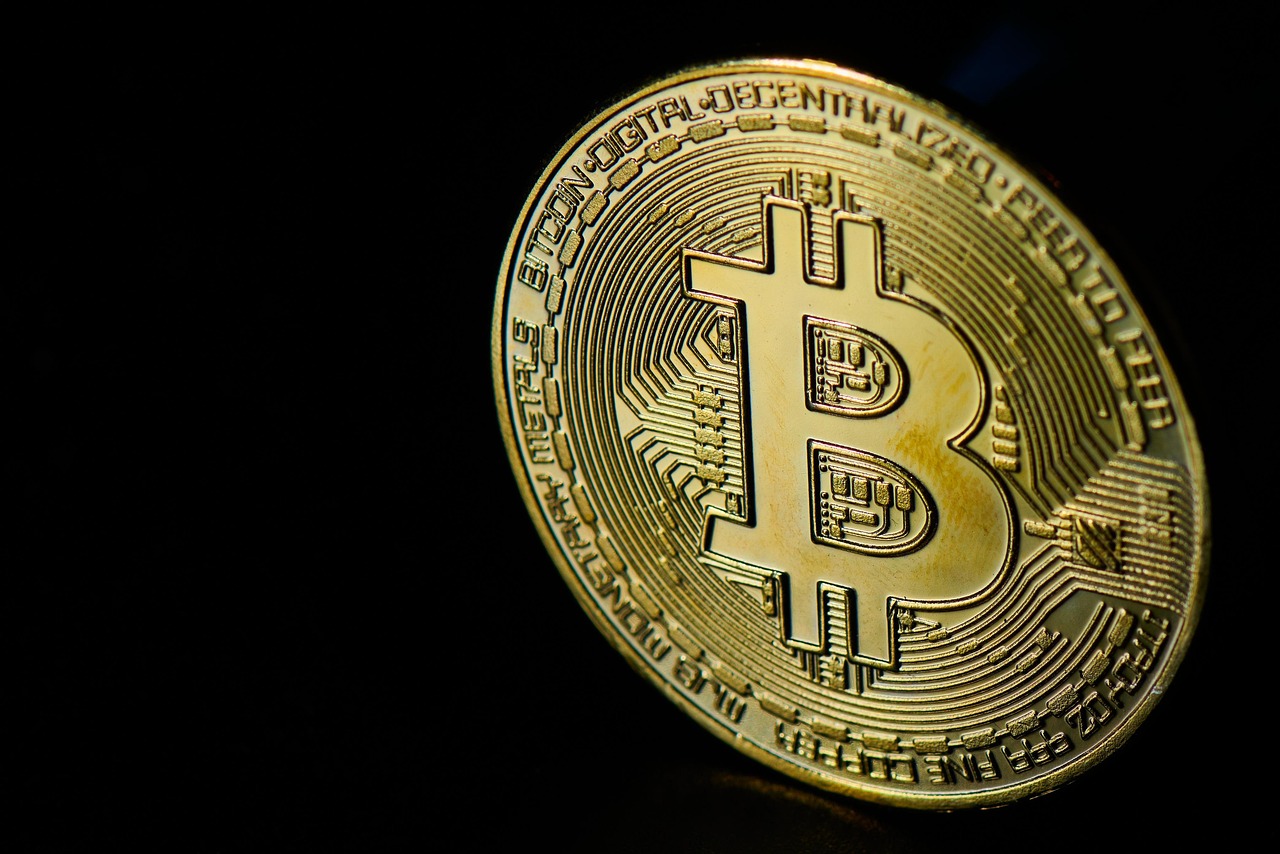
The traditional financial system, for centuries, has operated through intermediaries – banks, brokers, and exchanges – dictating how we save, invest, and transact. While functional, it often comes with fees, geographic limitations, and a lack of transparency that leaves many feeling excluded or underserved. Enter Decentralized Finance (DeFi), a revolutionary paradigm that leverages blockchain technology to create an open, permissionless, and transparent financial ecosystem. Imagine a world where anyone, anywhere, can access a full suite of financial services directly from their digital wallet, without needing a bank account or a government ID. This isn’t science fiction; it’s the rapidly evolving reality of DeFi, promising to democratize finance and reshape our understanding of money itself.
Understanding the Core Principles of DeFi
At its heart, Decentralized Finance is about stripping away the need for intermediaries. It rebuilds financial services from the ground up on public blockchains, primarily Ethereum, but increasingly on others like Binance Smart Chain, Solana, and Avalanche. This foundational shift introduces several critical principles:
Decentralization and Permissionlessness
- No Central Authority: Unlike traditional banks or financial institutions, there’s no single company or entity controlling DeFi protocols. Decisions are often made by token holders through governance mechanisms.
- Open Access: Anyone with an internet connection and a compatible crypto wallet can interact with DeFi applications. There are no gatekeepers, no credit checks, and no geographical restrictions. This opens up financial services to billions globally, including the unbanked.
- Trustless: Participants don’t need to trust an intermediary; instead, they trust the code of the smart contract, which is transparent and auditable.
Transparency and Immutability
- Public Ledger: All transactions on a blockchain are recorded on a public, immutable ledger. While personal identities remain pseudonymous, the flow of funds and contract interactions are entirely transparent. This fosters unprecedented accountability.
- Immutability: Once a transaction or smart contract execution is recorded on the blockchain, it cannot be altered or deleted. This provides a high degree of security and finality.
Programmability and Interoperability
- Smart Contracts: These are self-executing contracts with the terms of the agreement directly written into code. They automate processes like lending, borrowing, and trading, ensuring rules are followed without human intervention.
- Composability (Money Legos): DeFi protocols are often open-source and designed to work together, like digital LEGO bricks. This allows developers to combine existing protocols to create entirely new, innovative financial products, fostering rapid innovation.
Actionable Takeaway: Before diving in, take time to understand these core principles. Recognizing that you are interacting directly with code, rather than a traditional institution, is crucial for safe and effective participation in DeFi.
Key Pillars and Applications of DeFi
The DeFi ecosystem is vast and ever-expanding, offering a wide array of financial services that mirror and often surpass those found in traditional finance. Here are some of its most prominent applications:
Decentralized Exchanges (DEXs)
DEXs allow users to trade cryptocurrencies directly peer-to-peer, without the need for a centralized intermediary to hold their funds. This means users retain control of their private keys and assets throughout the trading process.
- How they work: Many DEXs utilize Automated Market Makers (AMMs) where liquidity is provided by users (liquidity providers) who deposit pairs of tokens into liquidity pools. Trades are then executed against these pools.
- Practical Example: Uniswap is a prominent DEX on Ethereum, enabling users to swap thousands of ERC-20 tokens. If you want to exchange ETH for DAI, you connect your wallet, select the tokens, and approve the transaction.
Lending and Borrowing Protocols
These protocols enable users to lend out their crypto assets to earn interest or borrow crypto by providing collateral, all without a bank.
- How they work: Lenders deposit assets into a protocol’s liquidity pool and earn interest. Borrowers can then take loans from this pool, typically by over-collateralizing their loan (e.g., depositing $150 worth of ETH to borrow $100 worth of stablecoins).
- Practical Example: Aave and Compound are leading lending protocols. A user can deposit USDC into Aave to earn a variable interest rate, or deposit ETH as collateral to borrow DAI.
Yield Farming and Staking
These are strategies for earning passive income on crypto holdings, often by providing liquidity or participating in protocol governance.
- Yield Farming: Involves deploying crypto assets across various DeFi protocols to maximize returns, often by earning governance tokens or additional fees. It can be complex and carries higher risk.
- Staking: Involves locking up cryptocurrency to support the operations of a proof-of-stake blockchain network. In return, stakers receive rewards.
- Practical Example: A user could provide liquidity to a UNI/ETH pool on Uniswap, receiving UNI-V2 LP tokens. They could then ‘farm’ these LP tokens on a platform like SushiSwap (which forked from Uniswap) to earn SUSHI tokens as rewards.
Stablecoins and Asset Tokenization
- Stablecoins: Cryptocurrencies designed to maintain a stable value, usually pegged 1:1 to a fiat currency like the US dollar. They are crucial for reducing volatility within DeFi. Examples include USDC, DAI (a decentralized algorithmic stablecoin), and USDT.
- Asset Tokenization: The process of representing real-world assets (like real estate, art, or commodities) as digital tokens on a blockchain. This could unlock liquidity and fractional ownership.
Actionable Takeaway: Research specific protocols and their smart contract audits before committing funds. Start with stablecoins and well-established lending/borrowing platforms if you’re new to the space to minimize volatility risk.
Benefits and Challenges of Decentralized Finance
DeFi presents a compelling vision for the future of finance, but like any nascent technology, it comes with its own set of hurdles.
Key Benefits
- Financial Inclusion: Provides access to financial services for the 1.7 billion unbanked adults worldwide, requiring only an internet connection.
- Transparency and Auditability: All transactions are recorded on public blockchains, fostering an unprecedented level of transparency and allowing anyone to audit the system.
- Efficiency and Lower Costs: By removing intermediaries, DeFi can significantly reduce transaction fees and processing times, especially for international transfers.
- Innovation and Composability: The open-source nature and ‘money lego’ approach enable rapid development and integration of new financial products and services.
- User Control and Sovereignty: Users maintain full custody of their assets and have direct control over their financial decisions, rather than entrusting them to a third party.
Significant Challenges
- Volatility: The underlying cryptocurrencies (like Ethereum) are highly volatile, which can impact the value of collateral and overall portfolio stability.
- Scalability and Transaction Costs (Gas Fees): Many DeFi protocols run on Ethereum, which can suffer from network congestion and high transaction fees (gas fees), especially during peak demand. Layer 2 solutions are emerging to address this.
- Security Risks: While blockchains are secure, smart contracts can have bugs or vulnerabilities that lead to hacks and significant loss of funds. Users must also be wary of phishing attacks and rug pulls (scammers abandoning projects).
- Regulatory Uncertainty: The lack of clear regulatory frameworks across different jurisdictions creates legal ambiguity and potential risks for users and developers.
- User Experience and Complexity: DeFi can be intimidating for newcomers due to technical jargon, complex interfaces, and the steep learning curve required for self-custody and protocol interaction.
- Liquidation Risk: In lending protocols, if the value of your collateral falls below a certain threshold, your assets can be automatically liquidated to repay the loan, often incurring fees.
Actionable Takeaway: Understand that while DeFi offers great rewards, it also comes with significant risks. Always conduct thorough due diligence on any protocol, prioritize security, and only invest what you can afford to lose.
How to Get Started with DeFi
Venturing into the world of decentralized finance can be exciting. Here’s a practical step-by-step guide to help you begin your journey safely and effectively:
1. Set Up a Non-Custodial Wallet
This is your gateway to DeFi. A non-custodial wallet means you, and only you, control your private keys (represented by a seed phrase). Losing this phrase means losing access to your funds.
- Software Wallets: Easy to use for beginners. MetaMask is the most popular browser extension wallet for Ethereum and EVM-compatible chains.
- Hardware Wallets: For enhanced security, especially with larger amounts. Devices like Ledger or Trezor keep your private keys offline, making them immune to online hacks. You can often connect these to MetaMask for seamless DeFi interaction.
- Security Tip: Never share your seed phrase. Write it down physically and store it in multiple secure, offline locations.
2. Acquire Cryptocurrency (e.g., Ether or Stablecoins)
To interact with DeFi protocols, you’ll need the native cryptocurrency of the blockchain you’re using (e.g., Ether (ETH) for Ethereum) to pay for transaction fees (gas) and to use as collateral or tradeable assets.
- Fiat On-Ramp: Purchase ETH or stablecoins (like USDC or DAI) from a reputable centralized exchange (CEX) like Coinbase, Binance, or Kraken using traditional payment methods (bank transfer, debit card).
- Transfer to Wallet: Once purchased, withdraw your crypto from the CEX to your non-custodial wallet (e.g., your MetaMask address). Double-check the address before sending!
3. Interact with DeFi Protocols
Once your wallet is funded, you can start exploring. Most DeFi applications have a “Connect Wallet” button.
- Decentralized Exchange (DEX):
- Go to a DEX like Uniswap or PancakeSwap.
- Connect your MetaMask wallet.
- Select the tokens you wish to swap (e.g., ETH for DAI).
- Review the transaction details (price impact, gas fees) and confirm the swap in your wallet.
- Lending Protocol:
- Visit a platform like Aave or Compound.
- Connect your wallet.
- Choose an asset to deposit (e.g., USDC) to start earning interest, or an asset to use as collateral (e.g., ETH) to borrow another asset.
- Approve the transaction in your wallet.
4. Understand Gas Fees and Network Congestion
Transactions on blockchains like Ethereum require a ‘gas fee,’ paid in the network’s native currency (ETH). These fees fluctuate based on network demand. High demand means higher fees.
- Check Gas Prices: Use tools like Etherscan Gas Tracker (for Ethereum) or equivalent for other chains to monitor current gas prices and plan your transactions during off-peak hours if possible.
- Consider Layer 2s: Explore Layer 2 scaling solutions (e.g., Arbitrum, Optimism) which offer significantly lower fees and faster transactions for many DeFi protocols.
Actionable Takeaway: Start small, educate yourself continuously, and never interact with a protocol or click on a link you don’t fully trust. Always double-check URLs to avoid phishing sites.
The Future of DeFi: Trends and Potential
DeFi is a rapidly evolving landscape, constantly pushing the boundaries of what’s possible in finance. Several key trends are shaping its future trajectory:
Cross-Chain Interoperability and Layer 2 Solutions
- Bridging Blockchains: The future will see greater interoperability, allowing assets and data to flow seamlessly between different blockchains (e.g., Ethereum, Solana, Avalanche). This will unlock greater liquidity and reduce fragmentation.
- Scaling for Mass Adoption: Layer 2 solutions (e.g., rollups like Arbitrum and Optimism) are critical for solving Ethereum’s scalability issues, offering faster transactions and significantly lower gas fees. This makes DeFi more accessible and practical for everyday use.
Institutional Adoption and Real-World Assets (RWAs)
- TradFi Meets DeFi: We’re seeing increasing interest from traditional financial institutions exploring DeFi for enhanced efficiency, transparency, and new investment opportunities. This could lead to a ‘hybrid DeFi’ where institutional capital flows into decentralized protocols.
- Tokenization of Everything: The tokenization of real-world assets like real estate, commodities, and intellectual property could be a game-changer. This allows for fractional ownership, increased liquidity, and global accessibility for assets previously illiquid or hard to trade.
Decentralized Autonomous Organizations (DAOs) and Enhanced Governance
- Community-Driven Governance: DAOs are emerging as powerful structures for managing DeFi protocols. Token holders collectively vote on proposals, protocol upgrades, and treasury management, ensuring decentralized decision-making.
- Evolving Governance Models: The future will likely see more sophisticated and efficient DAO structures, improving how decentralized communities coordinate and grow.
Predictive Markets and Decentralized Identity
- Augmented Prediction: Decentralized prediction markets allow users to bet on real-world events, leveraging collective intelligence.
- Self-Sovereign Identity: Decentralized identity solutions could give users more control over their personal data, making KYC (Know Your Customer) processes more efficient and privacy-preserving within DeFi, without needing central databases.
Actionable Takeaway: Stay informed about these emerging trends. Understanding the direction of DeFi can help you identify promising projects and position yourself to benefit from future innovations, while also being mindful of new types of risks that may arise.
Conclusion
Decentralized Finance is more than just a technological innovation; it represents a fundamental shift in how we conceive and interact with money and financial services. By leveraging the power of blockchain, smart contracts, and open-source development, DeFi is dismantling traditional financial gatekeepers, fostering unprecedented transparency, efficiency, and financial inclusion for billions globally. While significant challenges remain, from market volatility and security risks to regulatory uncertainty and the learning curve for new users, the pace of innovation within the DeFi ecosystem is astounding.
As the infrastructure matures with Layer 2 solutions, cross-chain bridges, and more user-friendly interfaces, DeFi’s potential to reshape global finance becomes increasingly evident. It empowers individuals with greater control over their assets, offers new avenues for passive income, and promises a future where financial opportunities are truly accessible to everyone, everywhere. For those willing to learn and navigate its complexities, DeFi offers not just a glimpse into the future of finance, but an active role in building it.